Monday - Friday 07:30 - 17:30, Saturday 07:30 - 16:00
Floor Sanding in Surbiton
Back to Portfolio
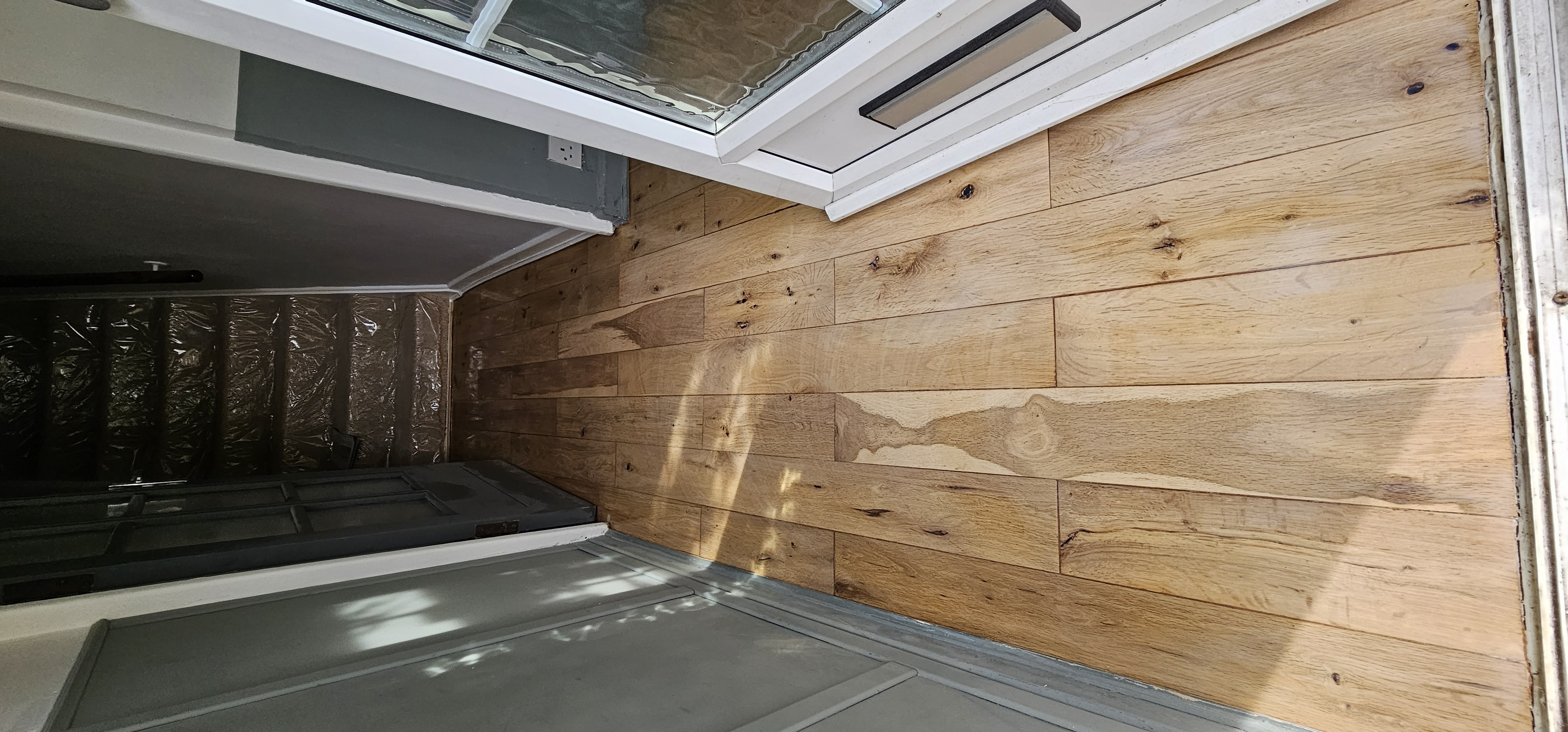
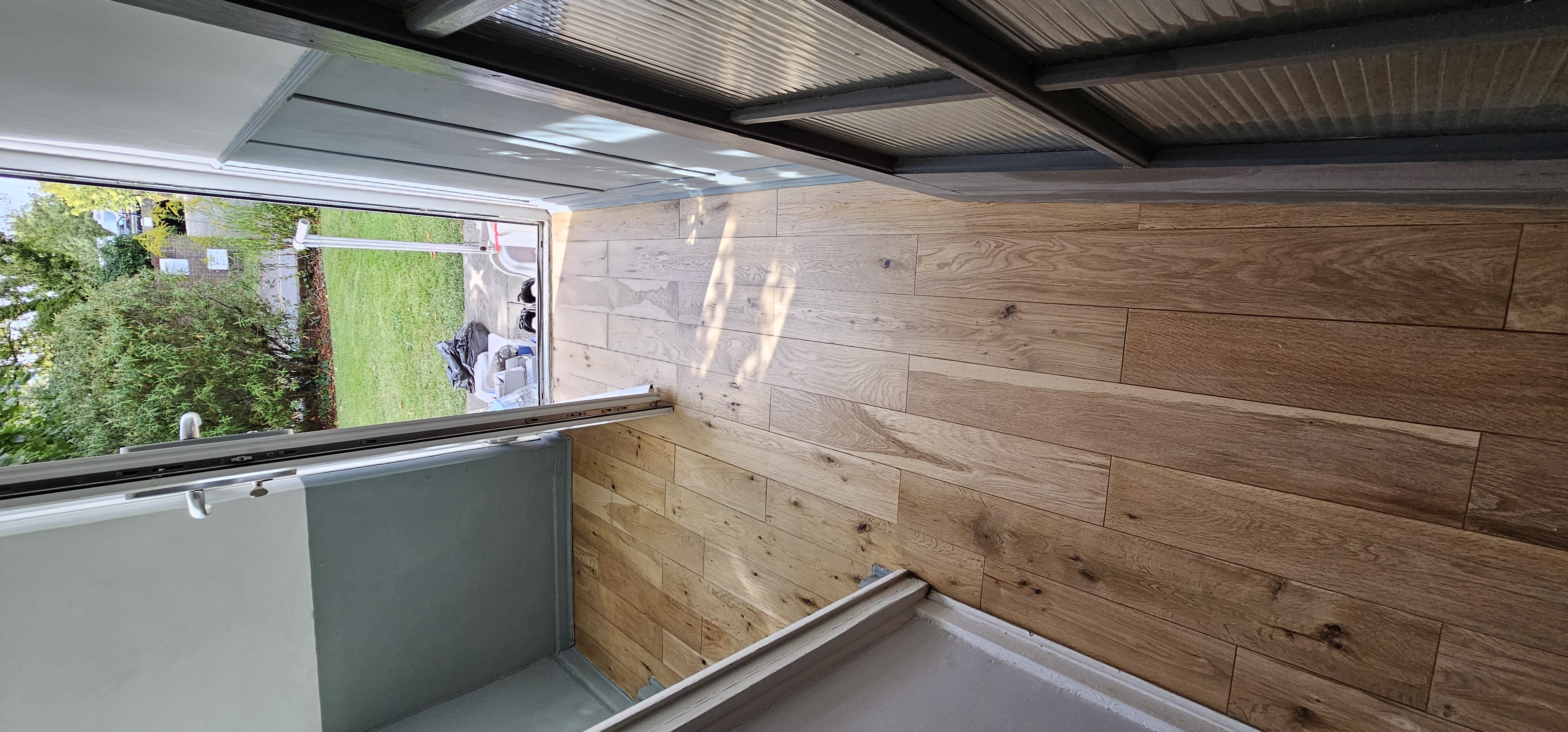
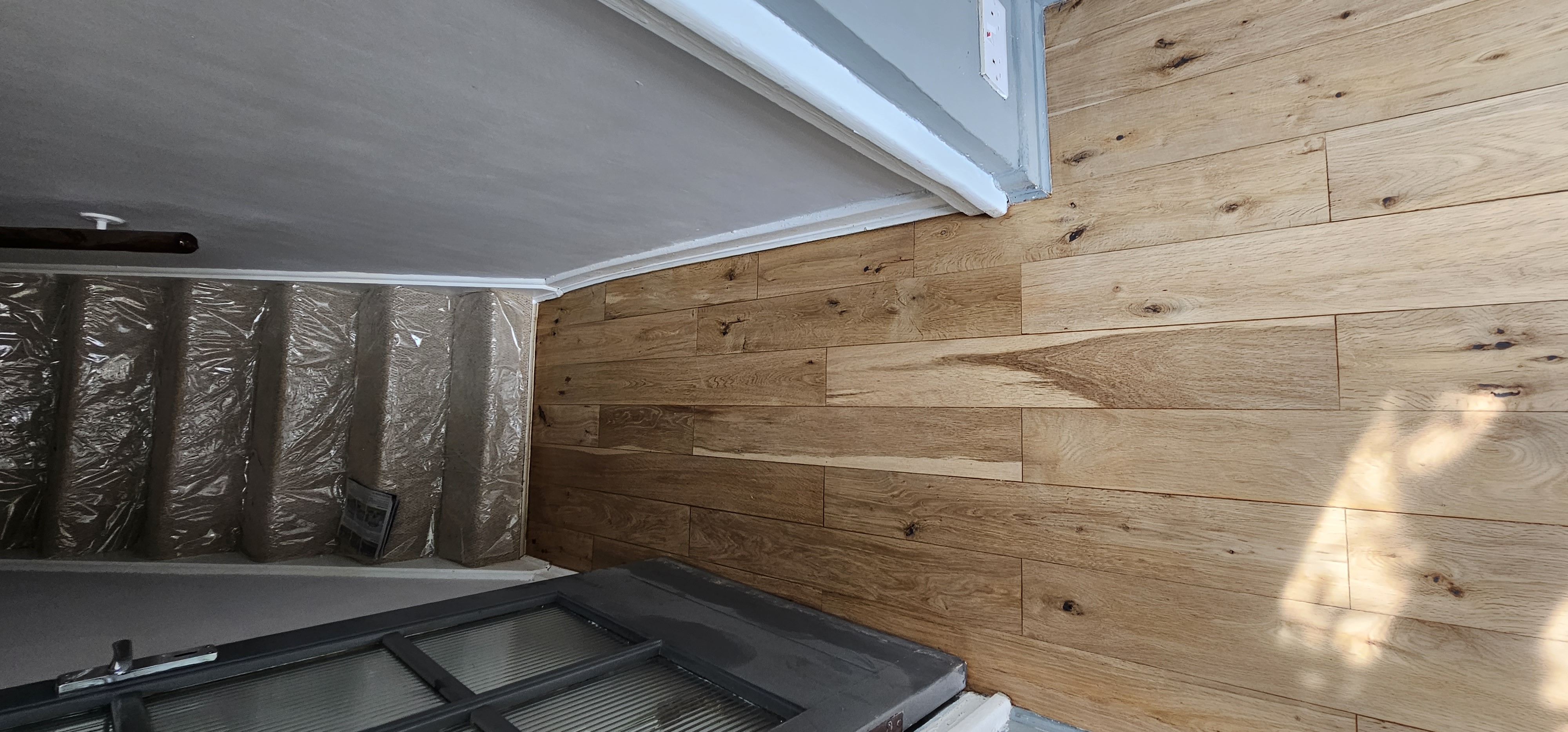
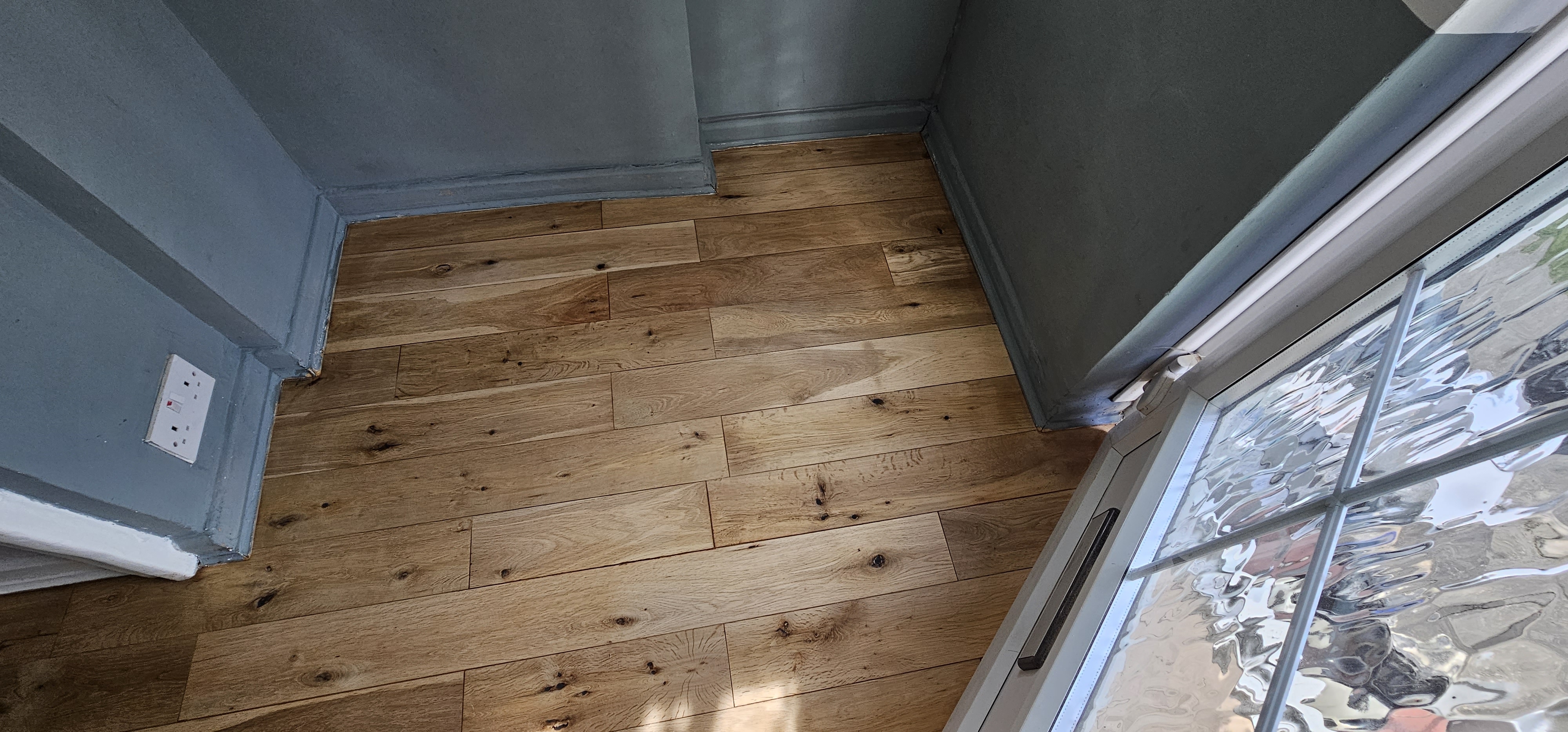
Floor Sanding in Surbiton
We recently completed a comprehensive floor sanding project on a Victorian terrace in Surbiton, restoring original oak flooring that had been hidden beneath carpet for decades. The work revealed beautiful grain patterns and a solid foundation that responded well to our multi-stage sanding process. The homeowners were delighted with the transformation and the newly finished floor now brings warmth and character back to their period property.
Work carried out
- Full floor sanding across ground and first floors
- Dust containment and professional extraction throughout
- Gap filling and repairs to damaged boards
- Multiple grit progression from coarse to fine finish
- Wood stain application to even colour variation
- Hard wearing matte polyurethane lacquer finish
- Thorough site cleaning and debris removal
About the project
This Surbiton property presented typical challenges for Victorian homes. The original oak boards varied significantly in colour, with some sections showing darker patches from years of water exposure and old adhesive residue from the previous carpet installation. Movement in the structure had also created slight gaps between boards, which we addressed using a fine wood filler matched to the final stain colour. The existing finish was uneven, with patchy varnish in some areas and bare wood showing through in others, making a straightforward sand and seal approach unsuitable.
Our approach involved starting with a coarse 36 grit abrasive to level the floor surface and remove the old finish completely. We then progressed through 60 grit and 100 grit stages to refine the surface, followed by a final 150 grit pass to achieve a smooth finish ready for staining. We used a professional dust extraction system throughout, which captures around 95 per cent of particles at source rather than allowing them to settle on furniture and fittings. This made a real difference to the household, as they were able to occupy other rooms during the work without excessive disruption. After staining, we applied two coats of matte polyurethane lacquer, which provides excellent durability for family use whilst maintaining the natural appearance of the wood.
About our Surbiton service
Surbiton is a diverse area covering everything from Victorian and Edwardian terraces to 1930s semis and modern apartment blocks. Many of the older properties in the town centre retain original timber floors that have simply been covered over with carpet or laminate. We regularly work on these discovery projects, where homeowners want to restore what's already beneath the surface. The Victorian and Edwardian floors typically use softwood or oak boards between 75mm and 150mm wide, and they're almost always worth restoring if the structural timber is sound. These older floors develop character and patina that new wood simply cannot replicate.
Properties from the 1930s onwards often have narrower boards, sometimes with a parquet or block pattern, and while these require the same careful technique they often need different finishing approaches due to the wood species used. Newer build apartments in Surbiton sometimes have engineered wood rather than solid boards, which requires a lighter touch and specialist knowledge to sand without damaging the veneer layer. We assess each floor individually before quoting, as the condition, wood type and existing finish all affect the work required and the results you can expect.
Frequently asked questions
How much does floor sanding cost per square metre?
Floor sanding typically costs between £25 and £45 per square metre, depending on the floor condition, wood type, and what finish you're choosing. A floor in poor condition with repairs needed will be at the higher end, whilst a straightforward sand and lacquer on sound boards costs less. We always quote based on a site visit rather than phone estimates, as the existing finish and floor condition make a genuine difference to labour time.
How long does sanding take?
A typical residential floor takes between three and five days from start to finish, depending on the total area and the depth of work required. Smaller ground floor rooms can often be completed in two days, whilst larger multi-storey projects run longer. You'll need to stay away from freshly sanded areas for 24 hours whilst we work, and for another 24 hours after the final coat of finish whilst it hardens.
Is the dust-free process really effective?
Our extraction system removes the majority of dust at source, but some fine particles inevitably settle in the home. We seal doorways and use air filtration to minimise this, but you should expect some dust despite our precautions. Covering or moving items of sentimental value beforehand is sensible, and a thorough vacuum of the whole property is needed after we finish.
Project Gallery