Monday - Friday 07:30 - 17:30, Saturday 07:30 - 16:00
Floor Restoration in Kingston
Back to Portfolio
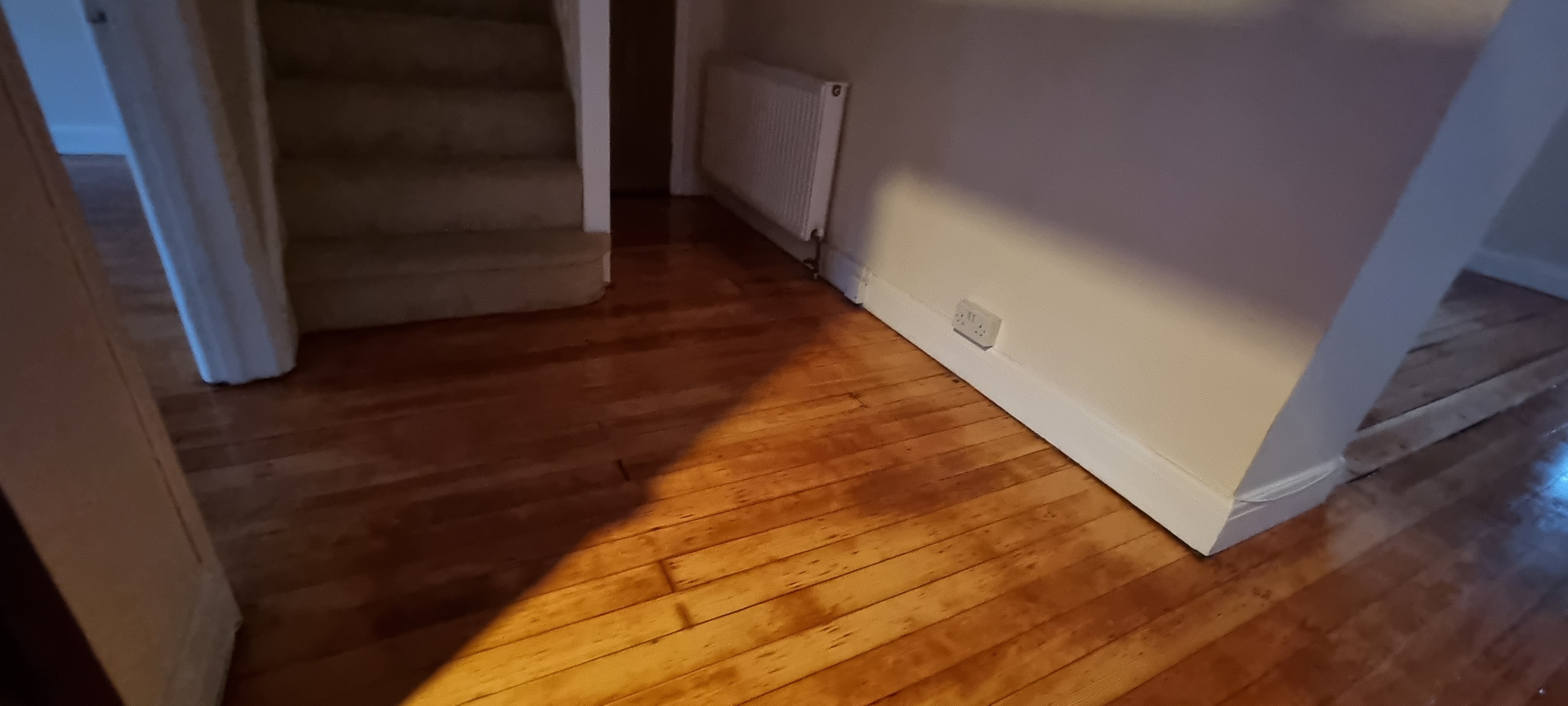
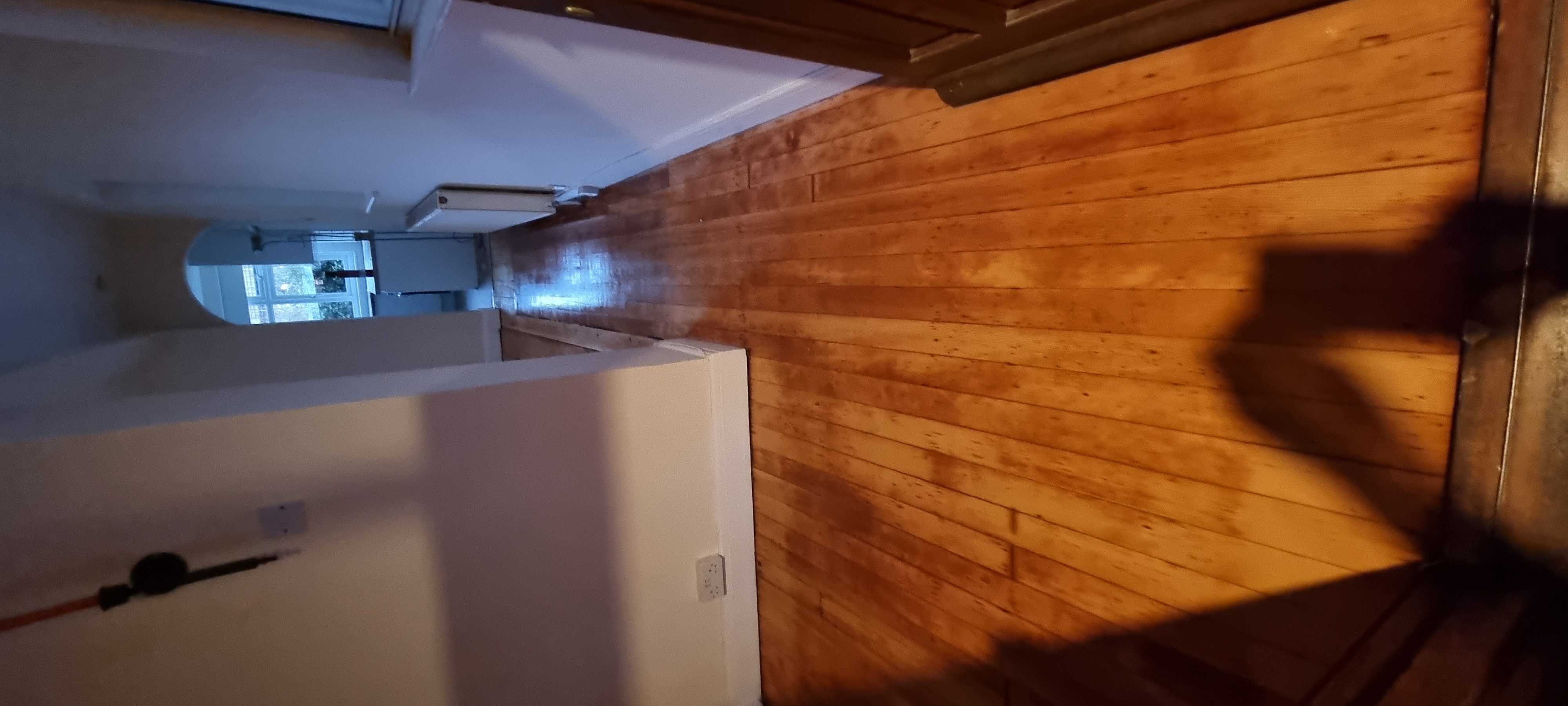
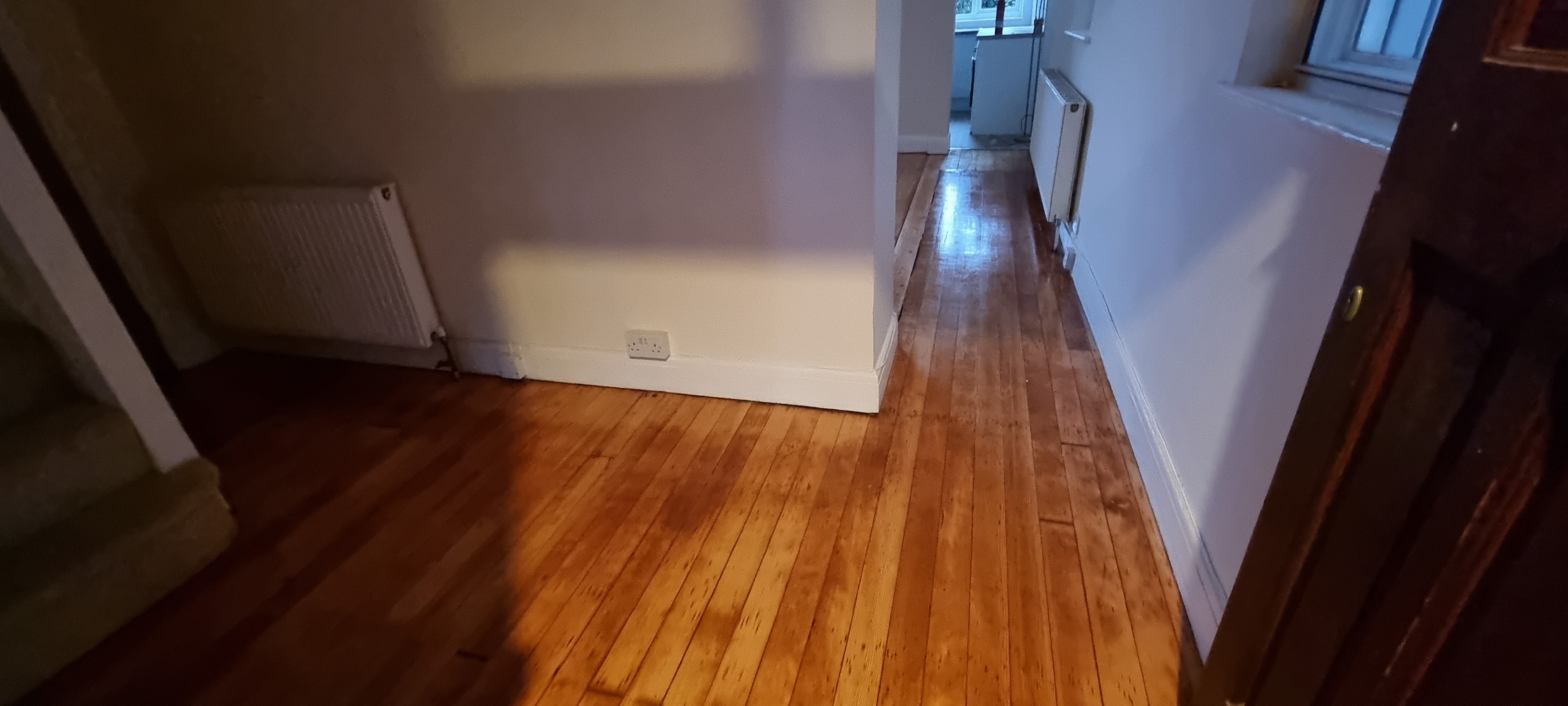
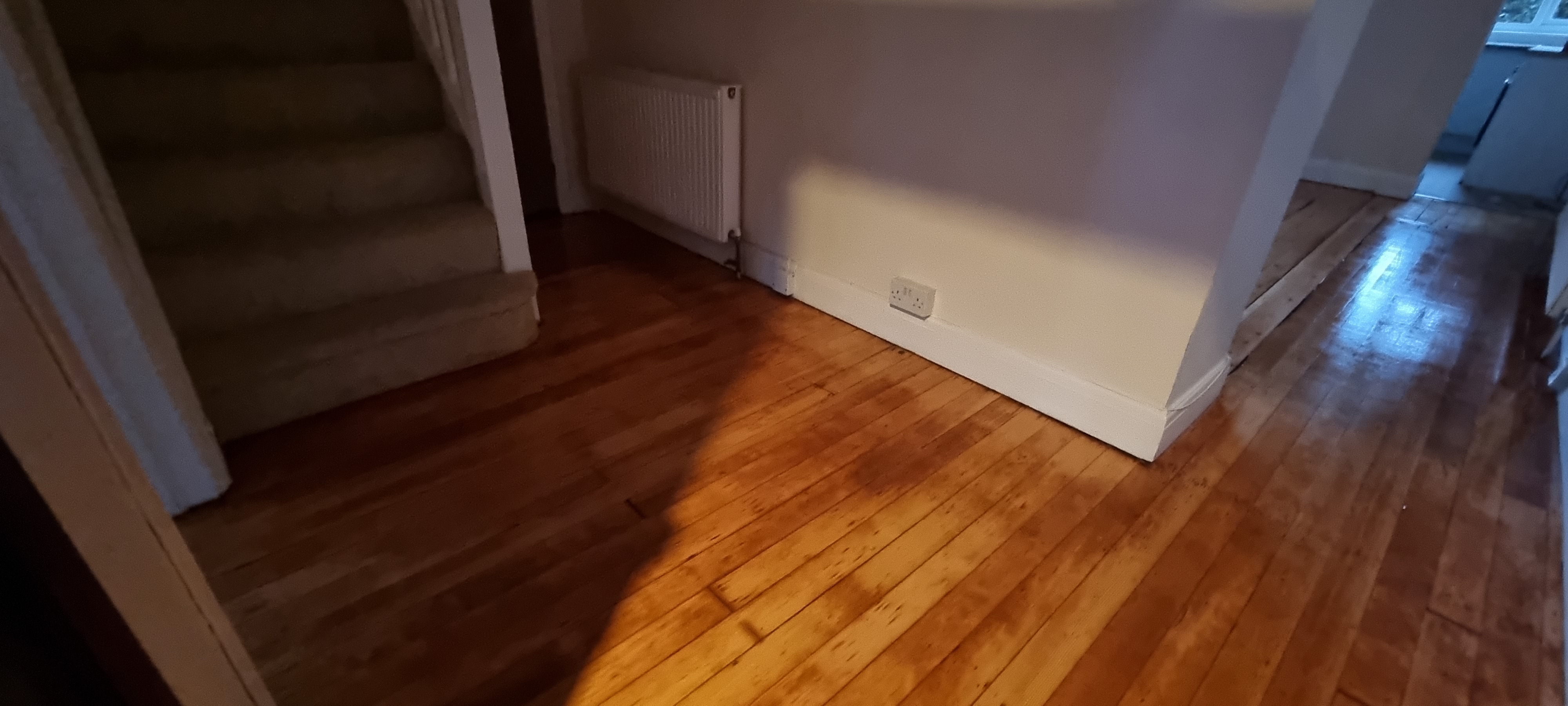
Floor Restoration in Kingston
A Victorian terraced property in Kingston required extensive floor sanding to restore its original oak boards. The work involved preparing three rooms on the ground floor and two bedrooms upstairs, with special attention given to the varied grain patterns and minor damage accumulated over decades of use.
Work carried out
- Floor sanding with industrial equipment across five rooms
- Dust containment and extraction throughout the property
- Grit progression from coarse to fine finishing
- Inspection and minor repairs to damaged boards
- Final surface preparation ready for sealing
About the project
The property owner had contacted us after discovering their original oak boards beneath a worn fitted carpet. The carpet had protected the floor from sun damage but also created an ideal environment for moisture and dust to accumulate. When we arrived to assess the work, we found the boards in reasonable condition overall, though there were several areas where previous water damage had left marks and slight warping. The main living room showed clear grain definition, while the bedroom floors had a darker patina from years of minimal light exposure. This variation in condition meant we couldn't apply a single standard approach, and we spent time planning how to address each space individually.
Our approach involved starting with coarse grit to level the surface and remove the old finish, then progressing through medium and fine grits to achieve a smooth, even result. The dust-free extraction system we used meant the client could remain in the property during much of the work, though we still recommended staying out during the initial sanding days when dust levels peak. The variable floor heights between rooms required careful edge work to ensure transitions remained safe and level. We worked methodically through the property, completing the ground floor first, then moving upstairs. Total sanding time came to five working days, with an additional day spent cleaning and preparing surfaces for the customer's chosen finish.
About our Kingston service
Kingston's housing stock is dominated by Victorian and Edwardian terraced properties, many of which contain original wooden flooring that sits beneath modern carpets or vinyl. We've worked on dozens of these properties across the area, and understand the specific challenges they present. The properties tend to have solid timber construction with good bones, but also varying levels of settling and movement from their age. Some boards may have been replaced over the years with mismatched timber, requiring careful assessment before sanding begins. We also regularly work on newer properties and conversions in Kingston, where engineered wood and laminate finishes have become increasingly common, though these require different approaches and cannot always be sanded.
The area's proximity to the Thames means many older properties have dealt with damp issues at some point in their history. When we survey floors prior to sanding, we always check moisture levels to ensure the timber is stable. Ground floor rooms in Victorian properties occasionally show signs of historic damp, which can make the wood softer and require adjustment to our sanding approach. We've built relationships with local damp specialists and can advise clients if remedial work should precede floor restoration. The variety of property types and conditions across Kingston keeps the work interesting, and means we've developed practical solutions for nearly every situation our clients present.
Frequently asked questions
How much does floor sanding typically cost? Sanding costs generally fall between £25 and £45 per square metre, depending on the floor condition, timber type, and whether repairs are needed. Additional costs may apply if the floor is unusually damaged or if access is restricted. We'll provide a detailed quote after surveying your property, breaking down costs by room so you understand exactly what you're paying for.
How long does the sanding process take? A typical project takes between three and seven days depending on the area size and floor condition. The actual time varies because some floors sand quickly while others, particularly those with thick old finishes or uneven surfaces, require more careful work. We'll discuss the timeline during the survey and let you know when to expect completion.
Is your sanding process dust free? We use industrial dust extraction systems that capture the vast majority of dust at source, significantly reducing the amount released into your home. While no process is entirely dust-free, our approach means you won't need to close doors or seal off rooms. We do recommend staying out of the property during the initial coarse sanding, when dust levels are highest, but clients can typically return in the evenings and resume normal use during fine sanding stages.
Project Gallery